

With venues operating on a knife edge and the cost-of-living decimating audiences, now seems to be the worst time to start promoting your own events.
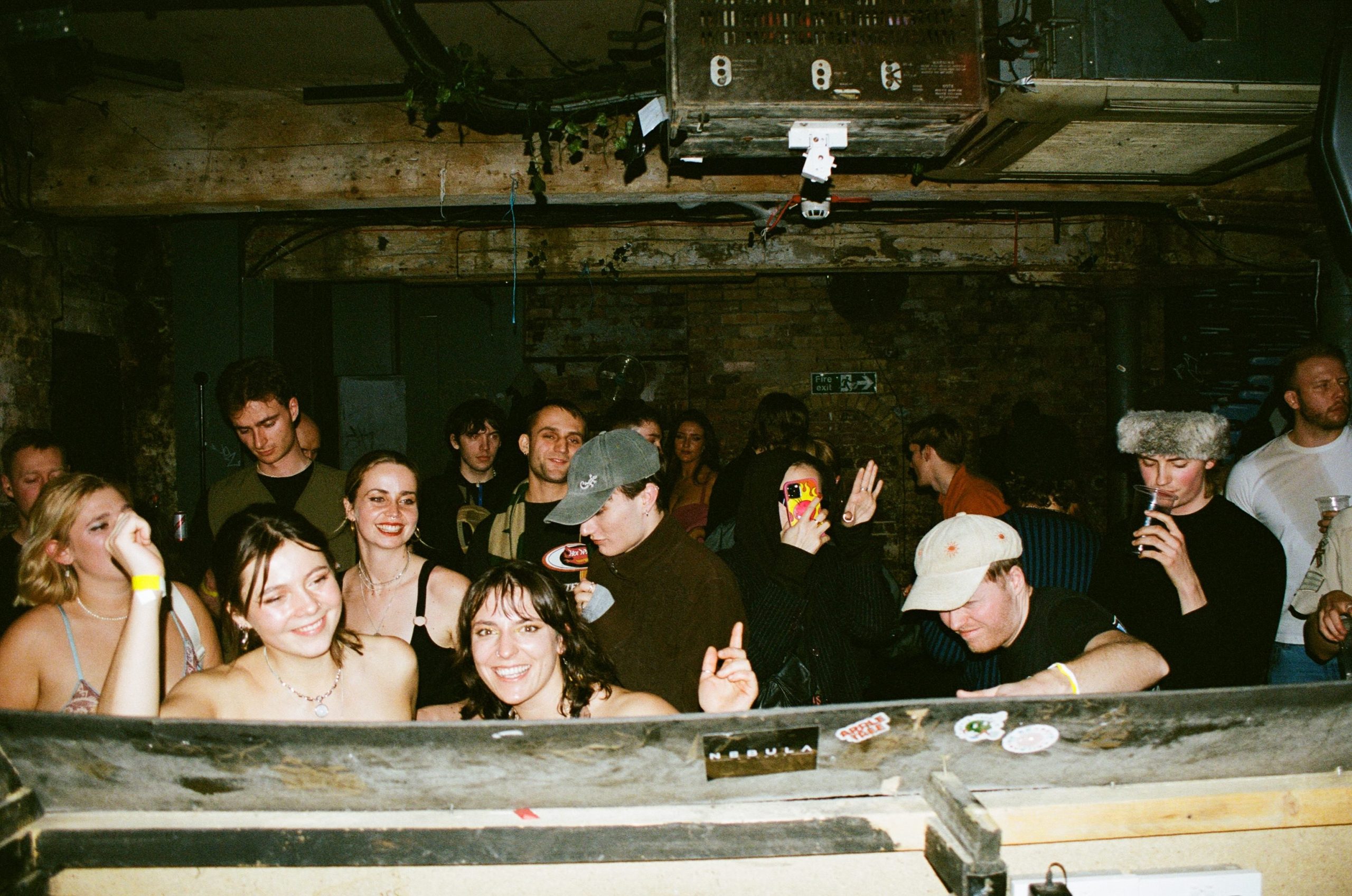
On a cold Thursday night in January, Venue MOT in Bermondsey is getting lively. A steady trickle of punters have taken the time out of their work schedules, knowing full well they will be back at their desks the morning after, with headaches and a dearth of serotonin, to see a selection of DJs curated by Shared Unit.
This club night/promotional tool/blog is the brainchild of DJ Cosimo, whose successful string of Chop Shop nights in Manchester have been a precursor to a move to London and the seemingly insurmountable challenge of recreating this success in a much bigger, more expensive pond.
“Going to night clubs in Manchester, there’s a really well-knit community of people. You know the people there and there’s really only about five clubs I’d go to anyway,” Cosimo explains a few days prior to Shared Unit’s Bermondsey event. “You know people on the door, behind the bar and, because it’s a smaller city, [the scene] is so much more condensed.”
“London has so much more variety, so the community’s a lot bigger but much less well-knit. The venues are also scarier, you have enormous clubs. In Manchester, after Warehouse Project [10,000 cap.], the next biggest clubs were Hidden and White Hotel [both around 350-400 cap.] and they’re so much smaller than venues like The Cause [1000 cap.] or Fabric [1600 cap.] for example.”
“There’s more competition, but also more of a range of venues to choose from and a bigger crowd to tap into, but tapping into it is harder than in Manchester, which was also much more open to smaller promoters. I think they just had more trust in us, even with [well-respected] venues like Soup.”
“To navigate the community and the scene in London is tricky but it’s something that just takes more commitment and time than Manchester,” Cosimo continues. “It can be cutthroat because if you don’t want to succeed, you won’t; you really need to give it your all to keep your head above the water. It’s just about trying, trying and more trying.”
The level to which London is a different beast extends beyond just getting in the door of the venues. Cosimo has previously sought to book artists for one of Shared Unit’s events in the capital, to find the outlay rapidly snowballing. “I’ve definitely been a victim of getting ahead of myself before,” he admits. “I’ll see someone I think is sick and then, purely because they’re in London, they’ll charge a higher fee, then a hotel will cost more, and then I’m paying for travel as well.”
The ins-and-outs of setting up an event aside, the deck is always going to be stacked against smaller promoters. “With this event, I was given a Thursday in January, which is obviously a tricky day to sell,” Cosimo explains. “I need to show [the venue] that I know what I’m doing. Then they can put their trust in me to have a bigger date on a Friday or Saturday.”
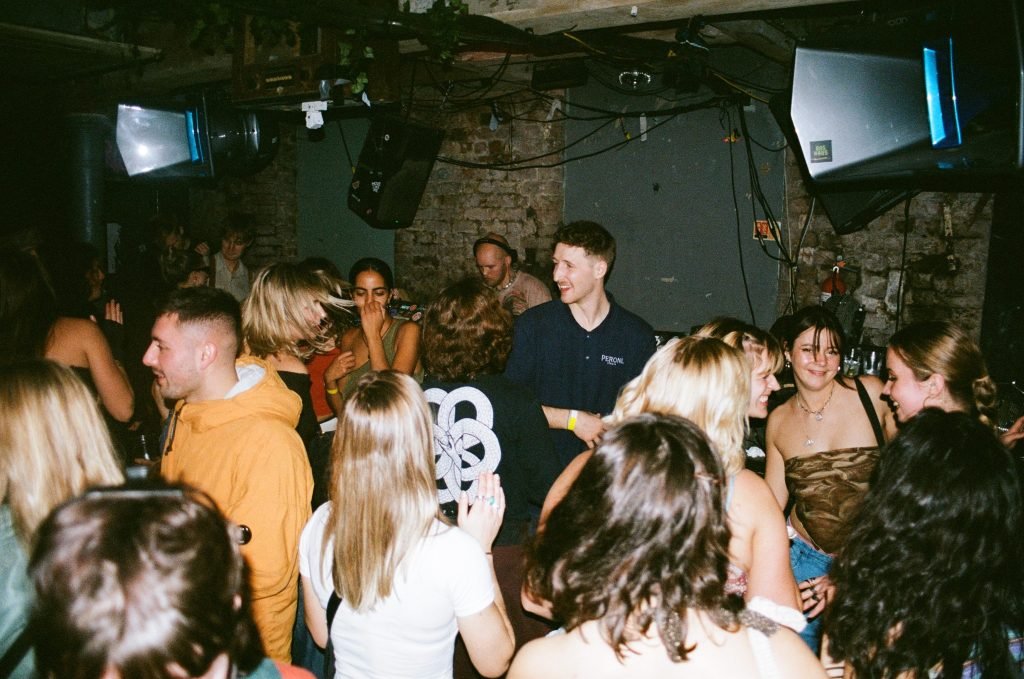
Thursday rolls around, and by 10:30pm the place is as packed as it will be all night. People have definitely turned up, albeit without the level of reckless abandon that a weekend slot would boast. Throughout the night, people buzz around the venue, from door to bar, to smoking area and back again.
The lineup is a mix of genres, local talent and more established names. Jorg Kuning is headlining at around midnight. I catch up with him just before his set: “The current iteration of what I’m doing, both with live sets and DJ shows really started at the White Hotel,” Jorg explains. “The jump from Manchester to London is something I’ve definitely experienced to some extent, luckily this place seems like London’s take on the White Hotel, obviously it’s also a converted garage, but I think there’s also some cross communication between the two venues.”
Later on in the night, Nora – a last-minute addition to the lineup – highlights how she got into this world to begin with: “My first event was actually a Chop Shop event at Old Abbey Taphouse in Manchester. I had been DJing at my ex’s party and Cos [Cosimo] was there. He said he wanted me in his event but was too drunk, so he had to get his friend to talk to me!”
“I started DJing as club culture started crashing towards the ground. I’ve had experience putting my own events on and it is just fucking difficult, so unpredictable,” she continues. “After lockdown, everything was kind of going to shit but I think that’s where independent nights help. Everyone’s on the same level, you know you’re going to be respected.” Nora then relays how a majority of her worst experiences have been through working with bigger brands and bigger promotors, whereas the level playing field between smaller artists and independent promotors has generally forged a bond and mutual respect between the two negotiating parties.

As the night enters its final act, the room has emptied out a little. The time is catching up with people, the ring of 8AM alarm clocks is only 6 hours away. South London-based DJ Ayse is in the smoking area. “I started out playing at Cabaret nights with friends from Uni in Manchester,” she explains. “Moving to London, you basically just have to start from scratch, and I was prepared to be a small fish in a big pond.”
“If you look at some of the biggest DJs now, Interplanetary Criminal, Peggy Gou, Shanti Celeste, they’re all in their 30s now,” Ayse continue. “I think that you can forget that it takes a long time. The good thing about these DIY events is that the people coming to them are normally more open-minded, they don’t have a set idea of the music they want to hear necessarily.”
The night turns out to be a qualified success. Cosimo seems to think he’ll be running at a loss no matter what but, despite it being a Thursday night in January, things have gone pretty well. “Shared Unit has always been about having a bit more thought behind running events,” he says. “That’s why we started with the blog, getting people to share opinions and ideas, and hopefully generating publicity for the events.”
“The whole process is quite scary, but as a small promoter you just have to go through these motions. Then, as you start gaining traction, you get more of a following. It’s knowing that this is a short-term loss for a long-term gain, that’s the biggest thing I tell myself.”
keep up to date with Shared Unit’s events via their Instagram
imagery: Shared Unit


