Nights like these are what London’s Jazz Cafe was designed for. Yes, of course there is a self-conscious eclecticism inherent in the venue’s choice of artists. However, the response to this should always be ‘if not us, then who?’
It is a warm spring evening in Camden. Even on a Wednesday the pubs around the station are packed. The feeling of summer being just around the corner is generating a distinct sense of excitement. And outside the doors of the Jazz Cafe, punters are flocking to hear a perfect soundtrack to the approaching season.
Léa Mondo’s sparsely orchestrated jazz is the exact type of thing to get Radio 6 DJs like Gilles Peterson whipped up into a state of (not entirely non-sexual) excitement. This is indeed what has happened and this opening slot seems to confirm Mondo’s ascension to the ‘one to watch’ bracket of the UK jazz scene.
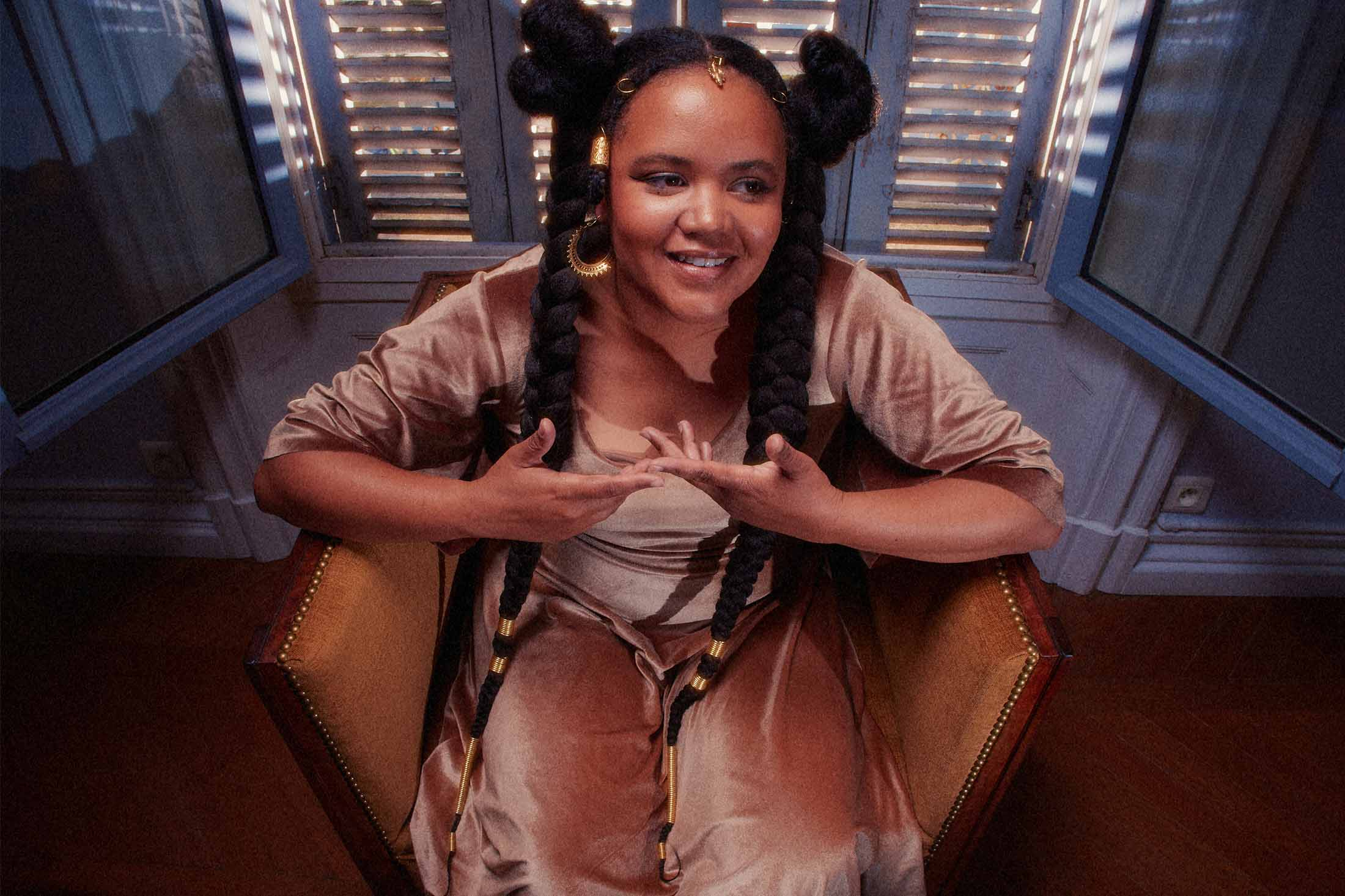
In terms of mood and tempo, the musical differences between Mondo and the headline act are vast. Kolinga are a six-to-eight piece who play an incredibly multi-layered and intricate, yet also very tight, mix of Congolese rumba, Highlife, and hints of French electro-pop.
These are not the only influences on display, each song encompasses a plethora of different subgenres. The stage presence of both frontwoman Rébecca M’Boungou and the band of mid-2010’s-hipster looking musicians behind her is one of ebullience. They seem to take a profound joy from every tempo change, every polyrhythmic switch-up.
Over the course of their set, Kolinga gleefully stretch out songs, the musical interplay becoming progressively more advanced. The bassist leans nonchalantly, he looks like he could be a member of the audience, apart from the fact that he is laying down a groove as solid as the load-bearing pillar on which he’s leaning.
The brass/woodwind section is ridiculously proficient, and seem to be the contingent enjoying themselves the most. One memorable performance sees the flautist break out into throat-singing, which is startling. Each musician gets their chance to indulge, though never to a degree that it detracts from the performance.
The band close with ‘Earthquake’, a multi-tempo tour-de-force, a slow, almost a capella start, building into a furious, hypnotic groove. By this point, one cannot help but notice that, for all the skill on display – the Afrika 70-level tightness, the furious drum solos, the multi-instrumentalism – the most arresting component is M’Boungou’s voice.
Singing alternately in English, French and Lingali, her voice fills every corner of every song. It is the defining musical force in a band full of big swingers. It is also the most potent conduit for both the sorrow and joy Kolinga’s music expresses. Long after the final notes have evaporated, that raw emotion is what stays. The walk back towards the station this evening feels a little bit lighter.
featured image: Mathias Bracho Lapeyre