As humans, we’re naturally bound to one another by more than just biology or society, but by a deeper thread of shared experience. It’s this invisible connection that gives meaning to our art, our protest, and our communities. In a time increasingly defined by division and disconnection, solidarity is no longer just a virtue- it’s a necessity.
Nowhere is this more visible than in the ways music can become a form of resistance and a tool for solidarity. As John Donne famously wrote in his poem ‘No Man is an Island’, we are not isolated beings, but parts of a greater whole. And while Donne’s metaphor speaks across centuries, it resonates strongly in Manchester today, a city whose musical identity is quickly beginning to change.
Now, despite Donne’s poetic license, Manchester is by no means an island of itself, though its canals and mills might suggest otherwise. For decades, it’s been a city shaped by its working-class roots, its diverse communities, and a relentless hum of industrial energy. Music, too, has long defined its identity, from the thunderous pulse of Factory Records to the swagger of Britpop, Manchester’s sound is practically etched into its various cobbled streets. So, after living here for only the last two years, it’s evident to me the effect it has on the city’s rising population. Unlike many other cities in the U.K., the sound that sticks here is one that’s formed through its community, an embodiment of the city’s musical companionship.
Yet, no longer content to lean on nostalgia or recycle its glorious past, a new creative community is rising in Manchester, one that honours the city’s musical heritage while deliberately breaking from it. This isn’t about worn guitars or anthems for football terraces anymore, its about experimentation, collaboration, and, most importantly, activism. The new wave of artists emerging from Manchester aren’t trying to recreate old glories; they’re building a different kind of stage—one that’s inclusive, politically aware, and radically open.
This is a shift that signals more than a change in sound. Manchester’s current creatives spotlight a deeper transformation in the city itself: a younger generation stepping forward, eager to replace tribalism with solidarity, protest with dialogue. And nowhere is this more relevant than at one of the city’s most important new music nights, ‘No Band Is An Island’.
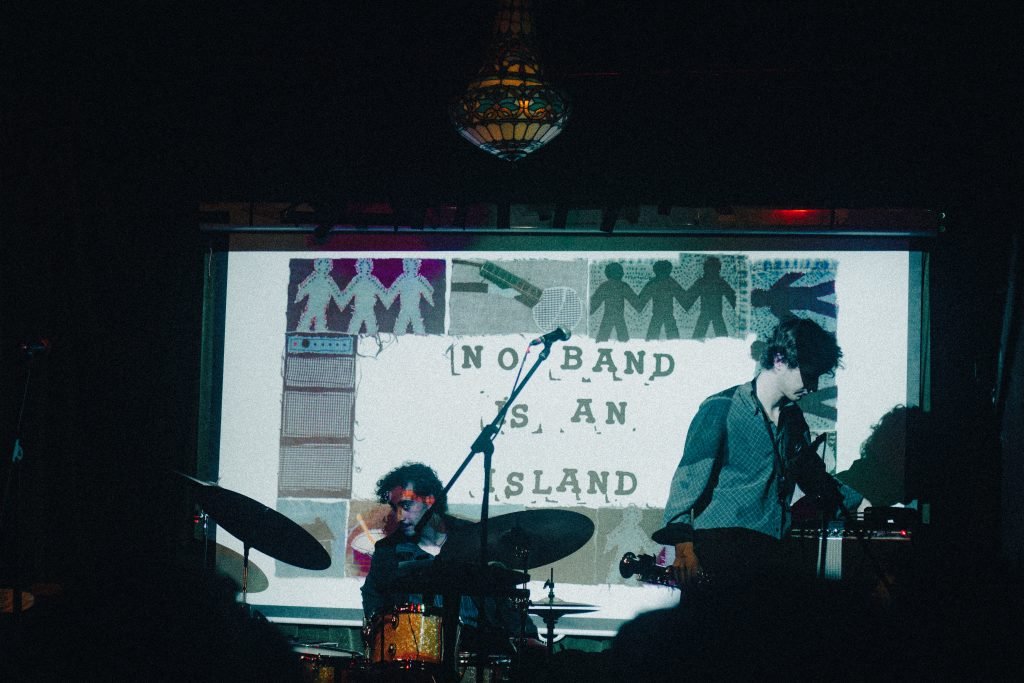
Not just a showcase of some of Manchester’s incredible upcoming musical acts, NBIAI is an event wholeheartedly set on building spaces (physical and digital) where music becomes a tool for connection, resistance, and reimagination. With its profits directly supporting Medical Aid For Palestine, there’s no other community that so succinctly inspires solidarity and direct action alongside the growth of new music.
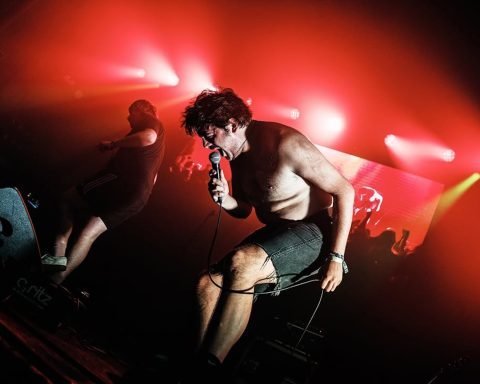
Tonight’s event takes place at Gullivers. It’s a venue that has, throughout the decades, showcased artists from all across the world, but this event feels different. The bar, even before doors open, stirs with palpable excitement from each huddled conversation. Queuing up the crooked stairs towards the gig room, stories strung from general musical chit-chat quickly folded into discussion over the event’s true cause as the queue extends from the stairwell and back down towards the bar.
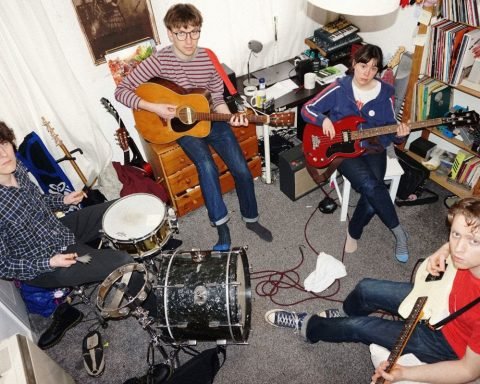
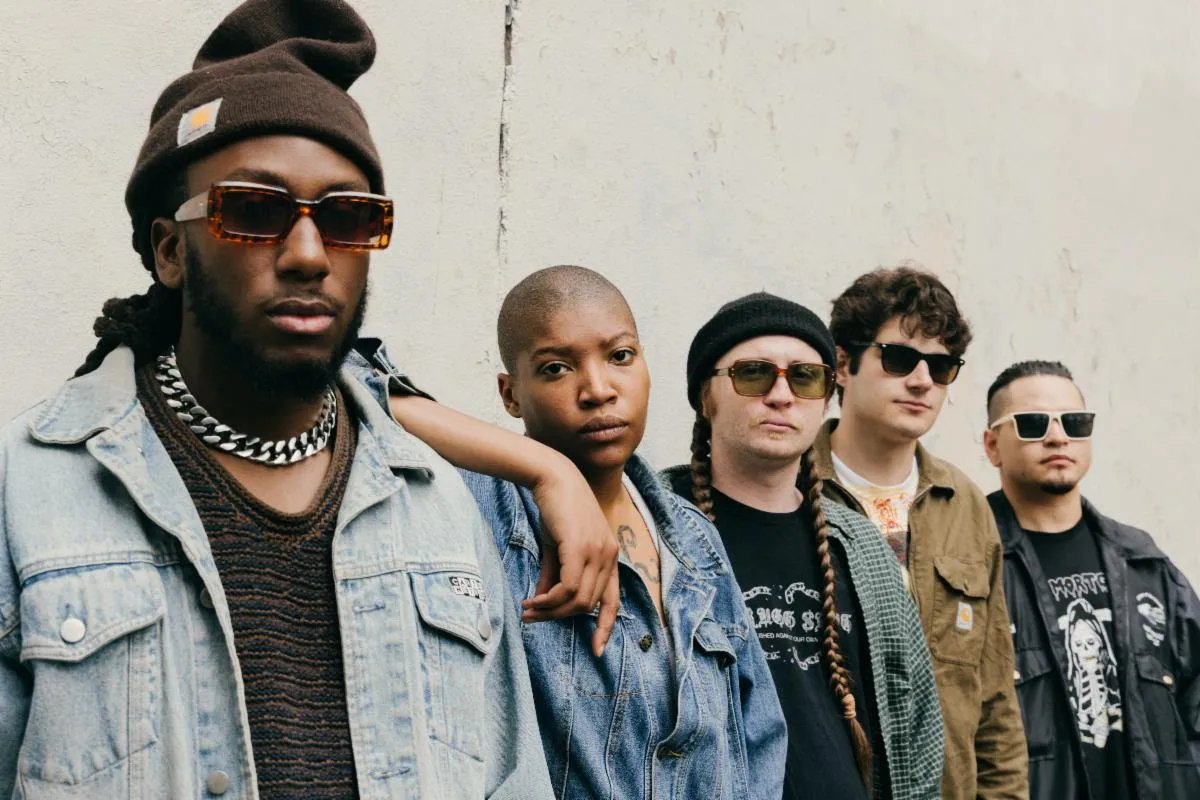
Up first are Manchester newcomers Wyatt, a band whose name had rattled from ear to ear across 2025. Underpinned by grungy guitar tones and ferocious rhythms, the band unfurl throughout their set, matching a somewhat signature roughness with a sweet melody only lifted by the final addition of a trumpet. Moving from side to side between the already packed crowd, it was clear to see the audience shares the air anticipation that lingers around such a new band, and I can’t wait to inevitably hear them again in the near future.
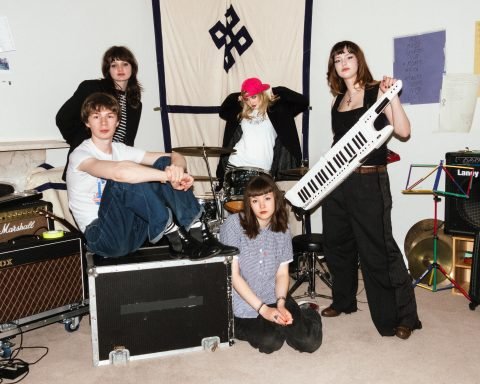
Up next are Dog Race, a band that have invited considerable intrigue off the back of some whirlwind performances across the summer; crafting a somewhat cult-like following across Manchester and further afield since the June release of their Return the Day EP. Forged somewhere between post-punk and gothic rock, the band’s eerie sound bounces off the venue’s four walls, reflecting a prism of light, beautiful and unsettling at the same time. Whether it’s the band’s haunting vocals or their unfading melodies, the now-packed room forces another few eager listeners closer to the venue’s speakers.
Amidst the cries of “Free Palestine” and the general roar of conversation, the event – true to its purpose – invites youth led activist group Youth Demand to the stage. Following two fantastic performances, the speaker, unafraid of what had now become a formidable crowd, silences the mumbling with a speech that urgently reminds us of the ongoing genocide in Palestine, and the action (or inaction) our government has taken in its involvement. It’s an empowering moment. A boldly worded speech invigorates the crowd with an energy formed in solitude, dying to be shared beyond the venue’s walls. At no point aggressive or spurred on by momentary hate, the speech encourages action and determination in a time where political discussion and peaceful legislation feel increasingly inadequate.
This political urgency feeds seamlessly into the rest of the evening, stunning the crowd into a standstill that disguises the shuffling and tuning of the event’s headline act – one that, to those in attendance, needed no introduction. Dove Ellis, who has been touring across the UK and abroad for the last few years, has been wowing audiences with a collection of songs that demand a second, maybe even tenth, listen. Set to support arguably the world’s most talked-about band of the moment, Geese, throughout November, Ellis has already built a magnificent following despite only one track being available on streaming platforms.
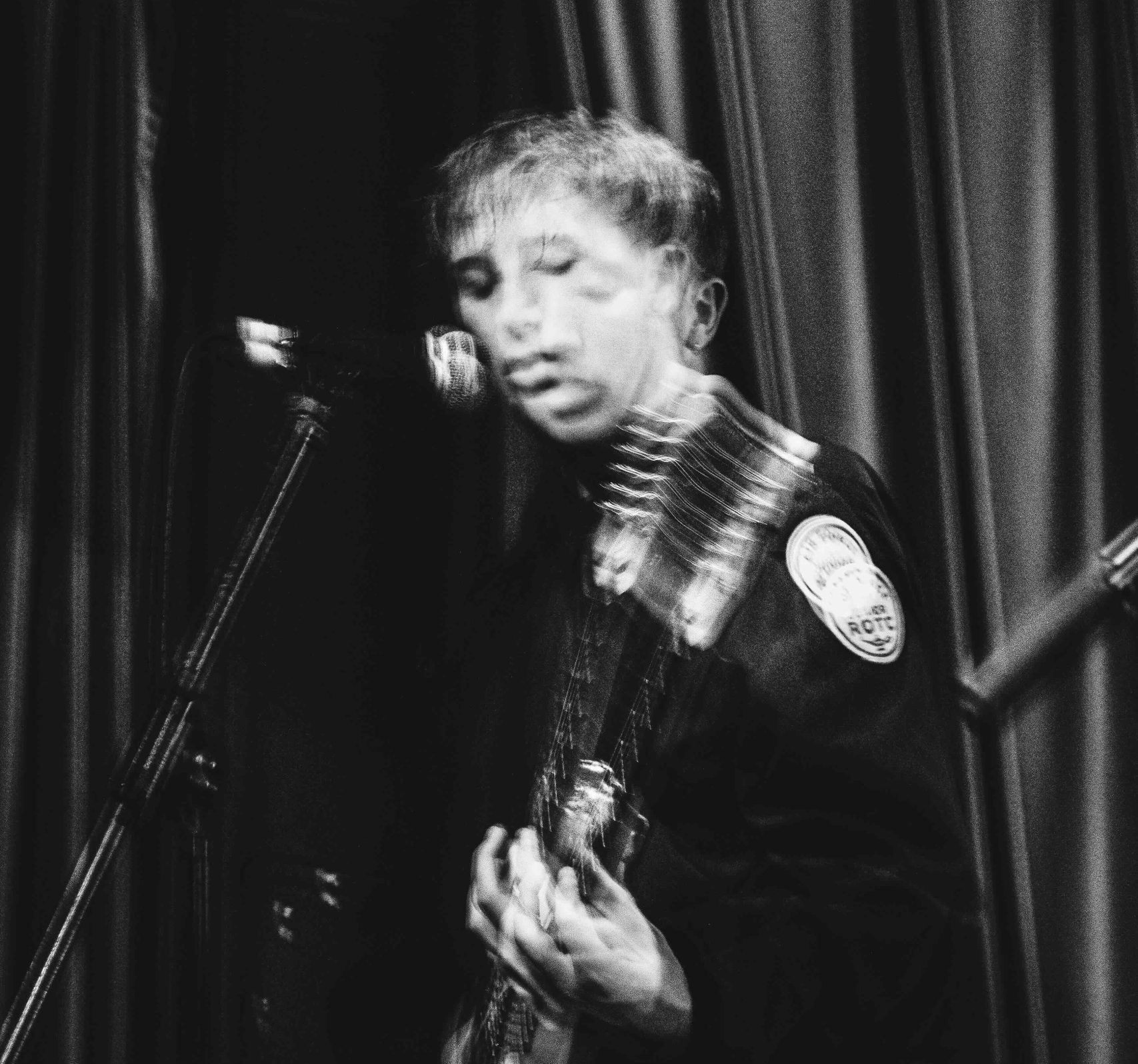
Much more than just a singer-songwriter, Ellis floated through each song sensitivity mirrored by the whole band. Gentle guitars falter into jilted chords as the lyrics paint vivid glimpses into a world untouched. There’s no denying this songwriter is exactly where he’s supposed to be, and – with a stack of songs yet unreleased – it’s a treasure to listen to him in his rawest form.
Leaving ‘No Band Is An Island’, I look back at the poem with which the event shares its name. No artist or creative should feel detached from the communities that give our art its meaning, and a community like the one pulled together tonight brings an indescribable sense of belonging in a world so often designed to divide us.
Not merely an evening designed to champion direct action in the face of genocide in Gaza, but one that reminds us that togetherness in music is more than harmony – it’s a commitment to lift each other up, to share in the struggles and triumphs tightly bound to our being. No Band Is An Island dares not only to imagine a platform for creatives, but to build it: loudly, collectively, and without compromise.
images: Gabbi Goldman