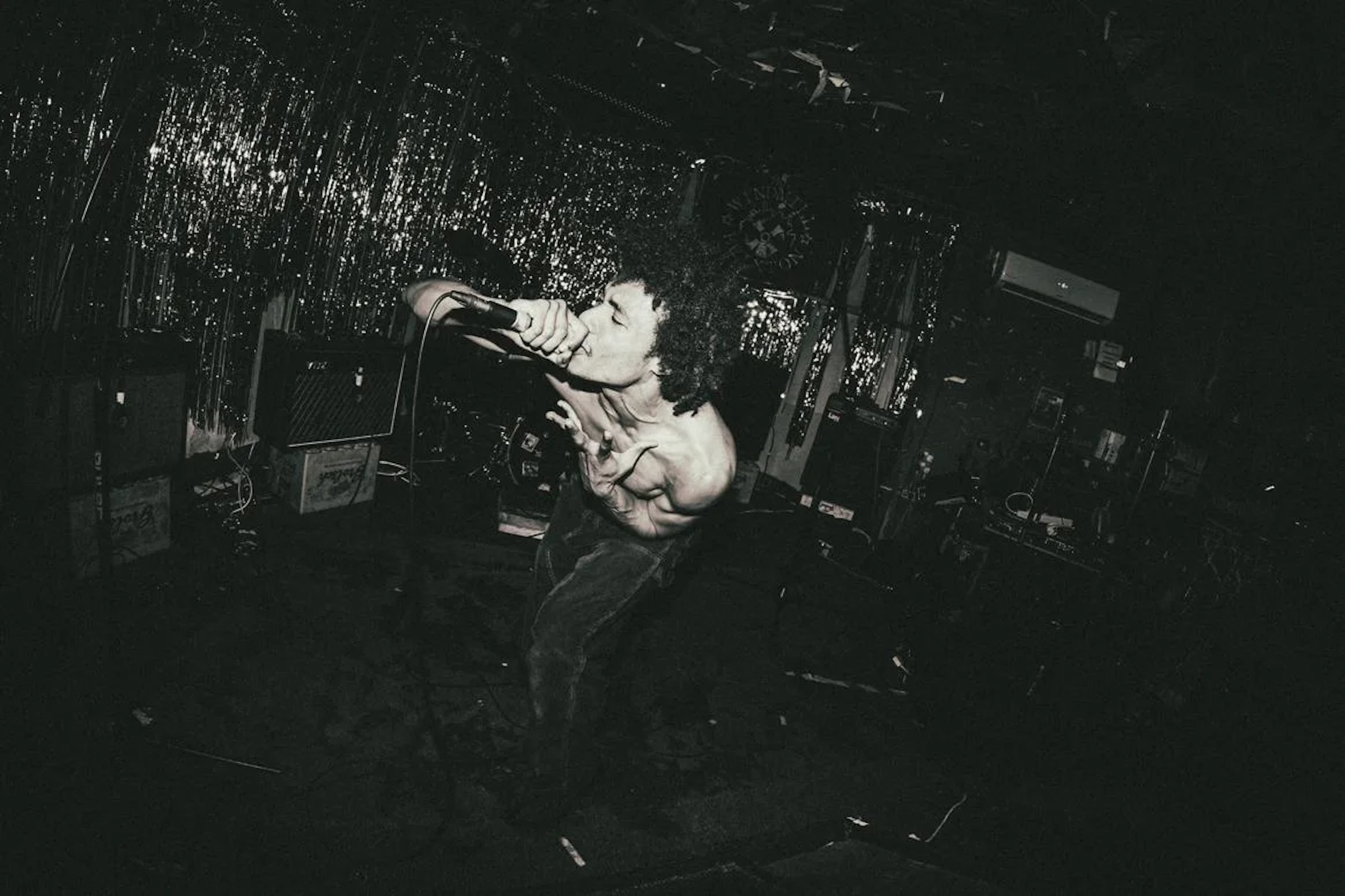

There are lots of associations you might make with Jarvis Cocker: corduroy suits, mooning Michael Jackson, seemingly spinning Charli XCX at Glastonbury. But an unlikelier one for the Pulp frontman – and the band themselves – has been that of nightlife. Pulp are currently touring the UK on the triumphant encore leg of their live reunion, and their show at the O2 was a reminder not only of the joys of their gangly version of Britpop, but also of the very different clubbing climate they made it in.
This might seem an odd thesis – the environs I picture when listening to Pulp are invariably a poky London bedsit rather than Room 1 of Fabric – but it’s one spelled out by Cocker and co. during their slick return to arena shows. The band take to the stage from behind a lush velvet curtain, with Cocker rising up from behind the top of an almost comically high flight of stairs. The initial salvo of tracks are from More, the band’s first album for over 20 years, with ‘Spike Island’ retaining the lager-in-the-air crooning that marked so many of their biggest 90s hits, and ‘Grown Ups’ dealing in the neurotic anxieties that have enabled Pulp’s back catalogue to outlive the shallow excesses of the era.
But it’s on track 3 – also taken from More – that we begin to see the band’s documenting of the great British night out take shape. ‘Slow Jam’ sees Jarvis inviting us into a Sheffield club, long-since demolished. “S.O.D.” he drily proclaims whilst introducing it: “Save Our Discos.” Over the course of the next few songs, he chronicles the course of a night spent on the tiles – the peak-time euphoria of ‘Sorted For E’s & Wizz’, the parochial romance of ‘Disco 2000’, and the dancefloor epiphany of ‘F.E.E.L.I.N.G.C.A.L.L.E.D.L.O.V.E.’. Pulp have always done a great line in morning-after soundtracks, too – ‘Bar Italia’ was practically made to accompany the stumble from a club to somewhere, anywhere to extend the night.

It’s an interesting framing to Pulp’s back catalogue, that of a night out, and instantly brings to mind what’s changed since the 90s, when these songs were written. It was the tail end of the second summer of love, with ecstasy’s reinvention of rave culture echoing across the UK, and the free party movement still a genuine political threat to the status quo. The welfare state enabled artists to live on the dole – albeit in the less-than-salubrious settings of Pulp tracks like ‘Mile End’ – and, crucially, gave them the time to make art in a way that the cost of living simply doesn’t in 2025. And, nightclubs were not only in abundance, but were places that acted as the nexus of entire music scenes – Cocker has spoken before about the importance of stumbling across the Sheffield alternative scene via the clubs and pubs those bands hung out in.
Where, then, do we find ourselves now? According to the BBC, in the last five years around 400 clubs have closed in the UK, but far from just the economic landscape around nightlife changing, it feels like there’s far more of an attitude shift at play here, too. Pulp were riding the coattails of one of the final cultural zeitgeists in this country – Britpop was one of the final times that it felt like the entirety of pop culture was united in one movement, before the fragmentation of the advent of streaming. Furthermore, via the band’s reflections on their youth, it’s hard to escape the effect of the lack of phones – you can’t escape the sense that so much of what’s written about here would now be documented for posterity. There’s a real sense that the subcultures they moved amongst were able to flourish away from too much scrutiny, and through this become both deeply brilliant, and strange.
Pulp’s reunion, then, shouldn’t just be viewed through the nostalgia-filtered glow of their Britpop remembrances – although, of course, to most of the crowd at the O2, that feels exactly the case; Pulp themselves are of course no strangers to nostalgia and Cocker’s writing has always specialised in that unique teenage longing for a time that one never even lived through. But here, there feels a genuinely overlooked connection, that of Pulp’s existence both within and adjacent to the club culture of the 90s. We shouldn’t only look to the likes of Massive Attack, Underworld and The Chemical Brothers when thinking of the legacy of 90s nightlife – Pulp were there all along, too, documenting it for those on the edges of the dancefloor as well.
featured image: Tom Jackson